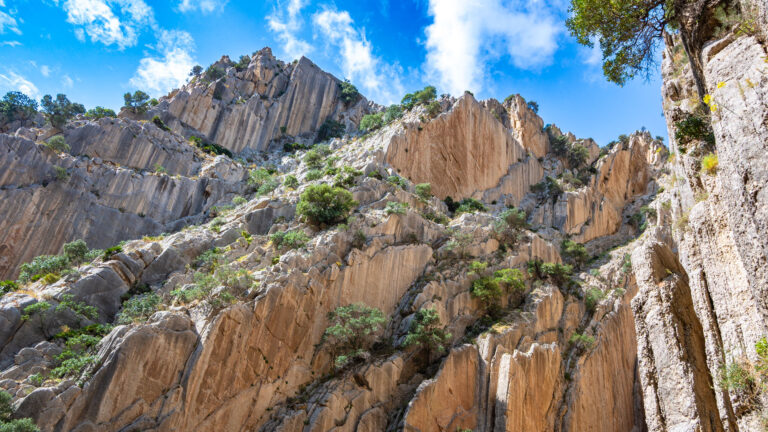
History of the Caminito del Rey – From 1905 to Today
Built for Workers, Closed, Reborn
The Caminito del Rey was never conceived as a hiking trail. No tourist project, no leisure path, no adventure attraction. It was built because it was needed. Because without it, a power station could not be maintained. Because without it, men could not move through the gorges of the Sierra Malagueña.
What attracts millions of visitors from around the world today began as a straightforward piece of infrastructure – and became, through decay, myth and an extraordinary restoration, one of the most famous trails in Europe.
1901–1905: Construction under extreme conditions
The brief
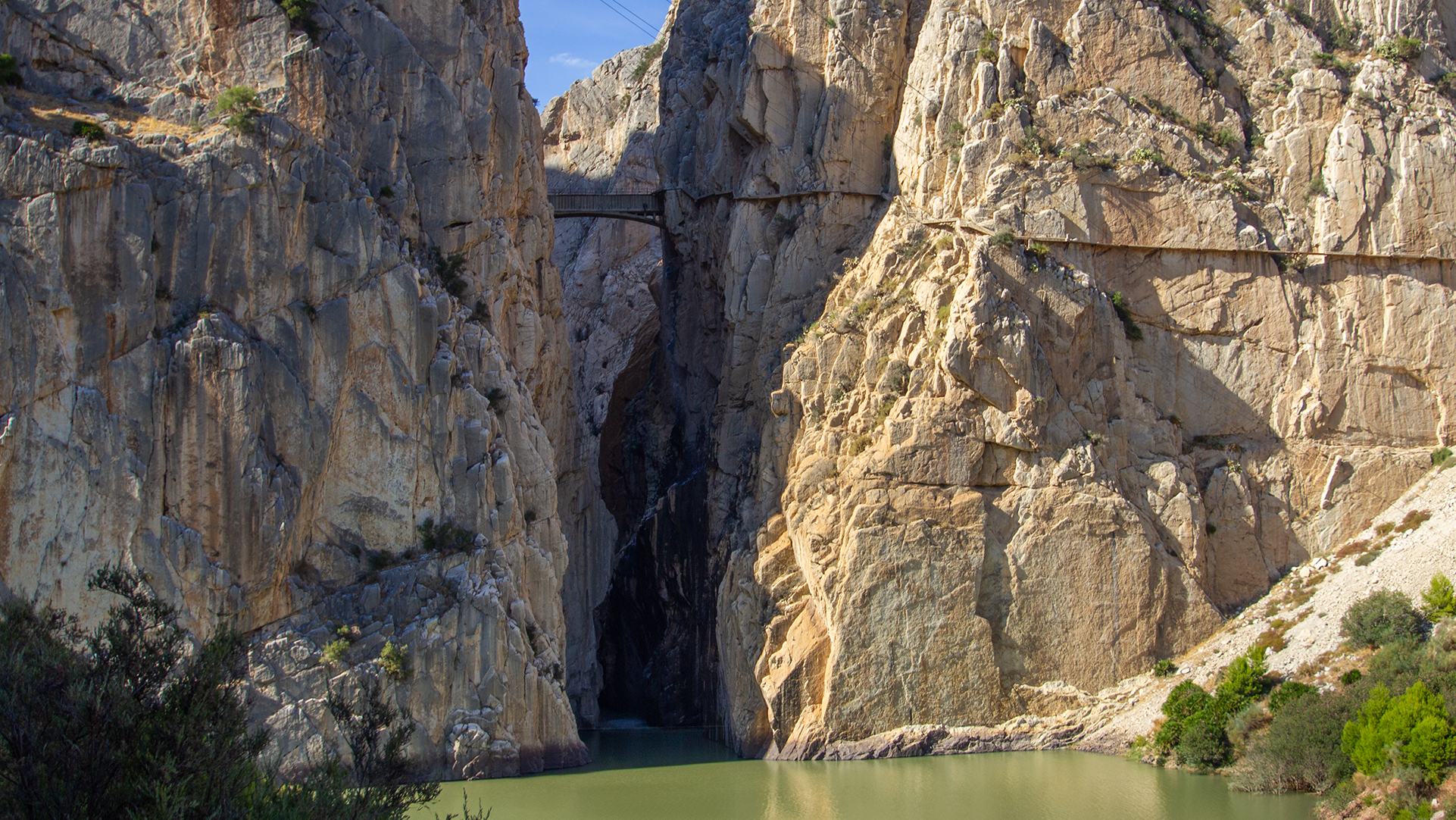
Around the turn of 1900, the company Sociedad Hidroeléctrica del Chorro began construction of two hydroelectric power stations in the Desfiladero de los Gaitanes: the El Chorro plant and the El Chorro Alto plant. Both were located deep within one of the most inaccessible gorges on the Iberian Peninsula.
To build, maintain and supply the installations, an access path was needed directly on the cliff faces. A path where no path existed. A walkway that had to be drilled into the rock.
The workers
Many of the construction workers were sailors from Málaga – accustomed to working at height, clinging to masts and rigging. They were hired because they had no fear of the drop. It is said that condemned men also worked here to reduce their sentences.
Conditions were extreme: no safety nets, no modern equipment, sheer rock faces, summer heat and winter cold. How many men lost their lives is unrecorded.
„A masterpiece of engineering that turned fishermen into construction workers deep in the mountains.”
Completion in 1905
By 1905 the path was complete. At its narrowest just 1 metre wide, driven directly into the limestone, no railing, no safety line. A maintenance path. Functional. Brutal. Efficient.
1921: A king gives the path its name
On 21 March 1921, King Alfonso XIII walked the path on the occasion of the ceremonial inauguration of the El Chorro dam. A state occasion. A king in the gorges of Andalusia.
From that day the path bore his name: Caminito del Rey – the little path of the king. A grand name for a narrow track.
1989–2002: From decay to protected status
1989: Nature reserve
Law 2/1989 of the Junta de Andalucía declared the Desfiladero de los Gaitanes a Paraje Natural – a protected natural area. The entire zone was now officially under protection: the gorge, the cliff faces, the flora, the fauna.
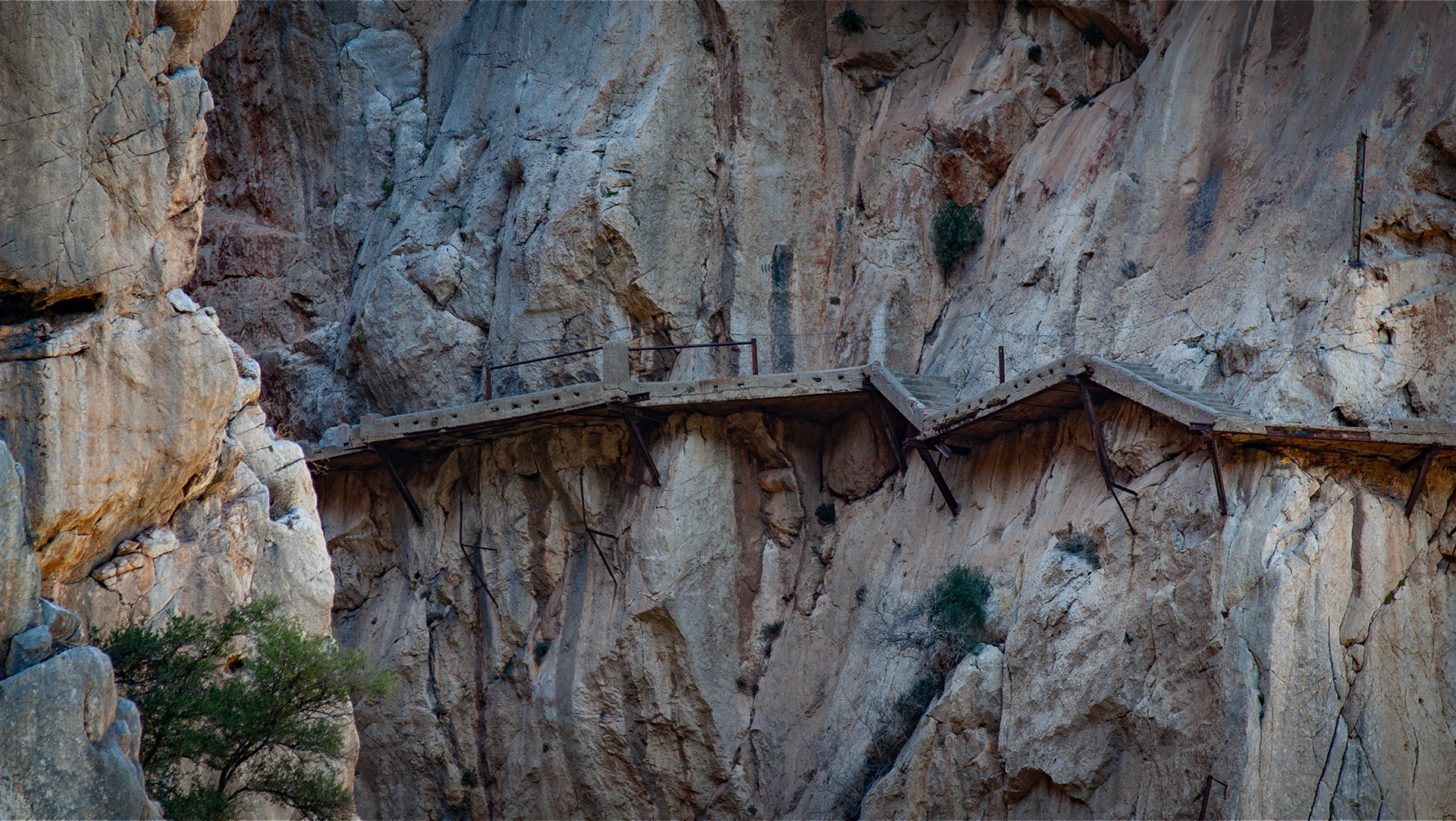
The path itself continued to decay quietly. The power stations fell out of use, the wooden planks rotted, the steel cables rusted. Anyone who still walked it did so entirely at their own risk.
2002: European Special Protection Area
In 2002 the Desfiladero de los Gaitanes was additionally designated a ZEPA (Zona de Especial Protección para las Aves) – a European Special Protection Area for Birds. The reason: the exceptional concentration of raptors in the thermals above the gorge. Griffon vultures, golden eagles, Egyptian vultures and peregrine falcons nest here in the rock fissures.
2000: Closure – the world’s most dangerous footpath
In 2000, the Caminito del Rey was officially closed. The path was in a state that left no alternative: rotting wooden planks, missing sections, rusting brackets. A fall meant a long fall.
This deterred no one. On the contrary: the closure made the trail famous. Climbers, adventurers and thrill-seekers from across Europe came precisely for the danger. Images and videos of the decaying Caminito del Rey spread across the early internet and turned it into legend.
Various media declared it the “world’s most dangerous footpath” – a title that became mythology, however much it exaggerated the reality.
2011–2015: The full restoration
The project
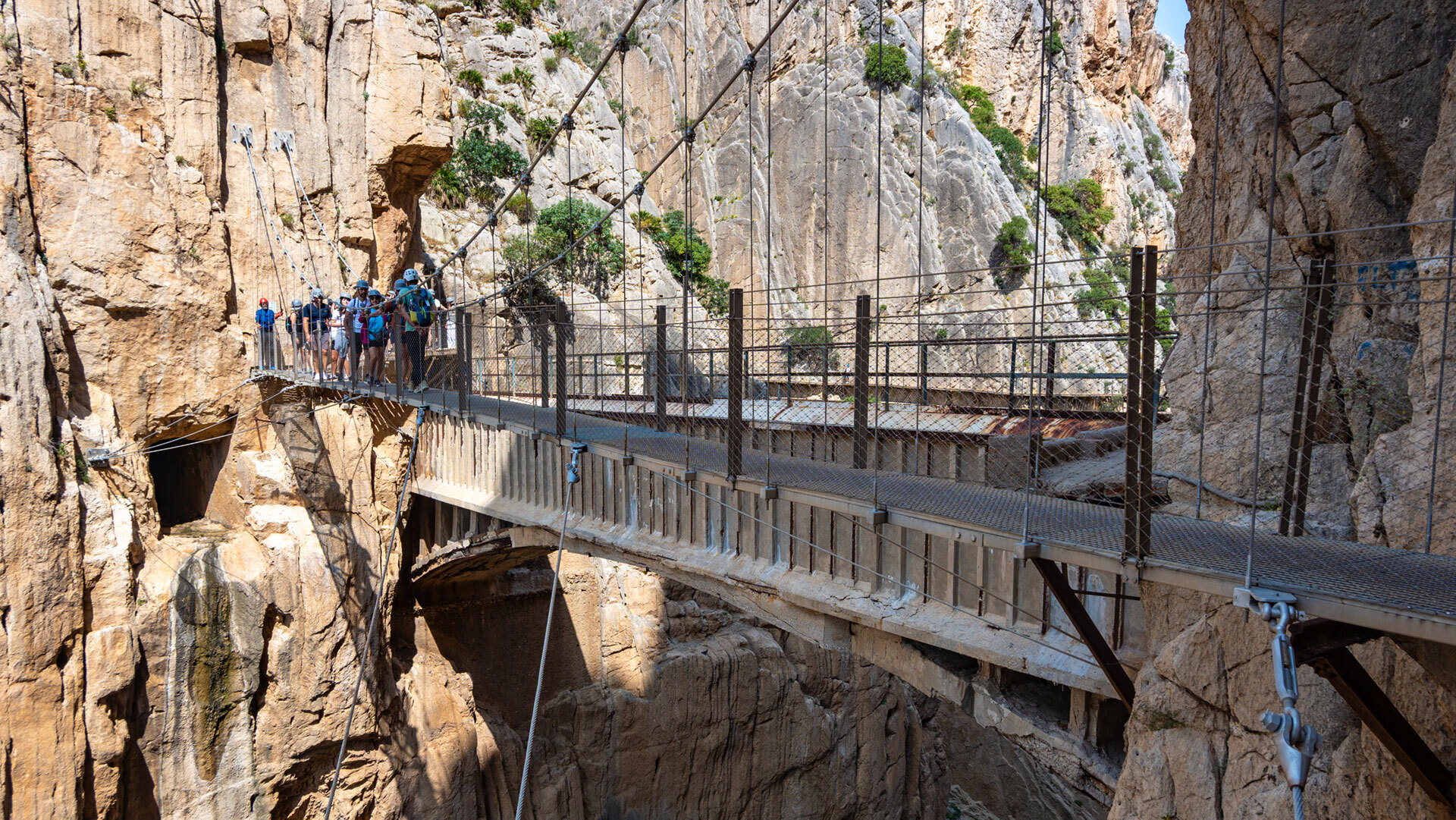
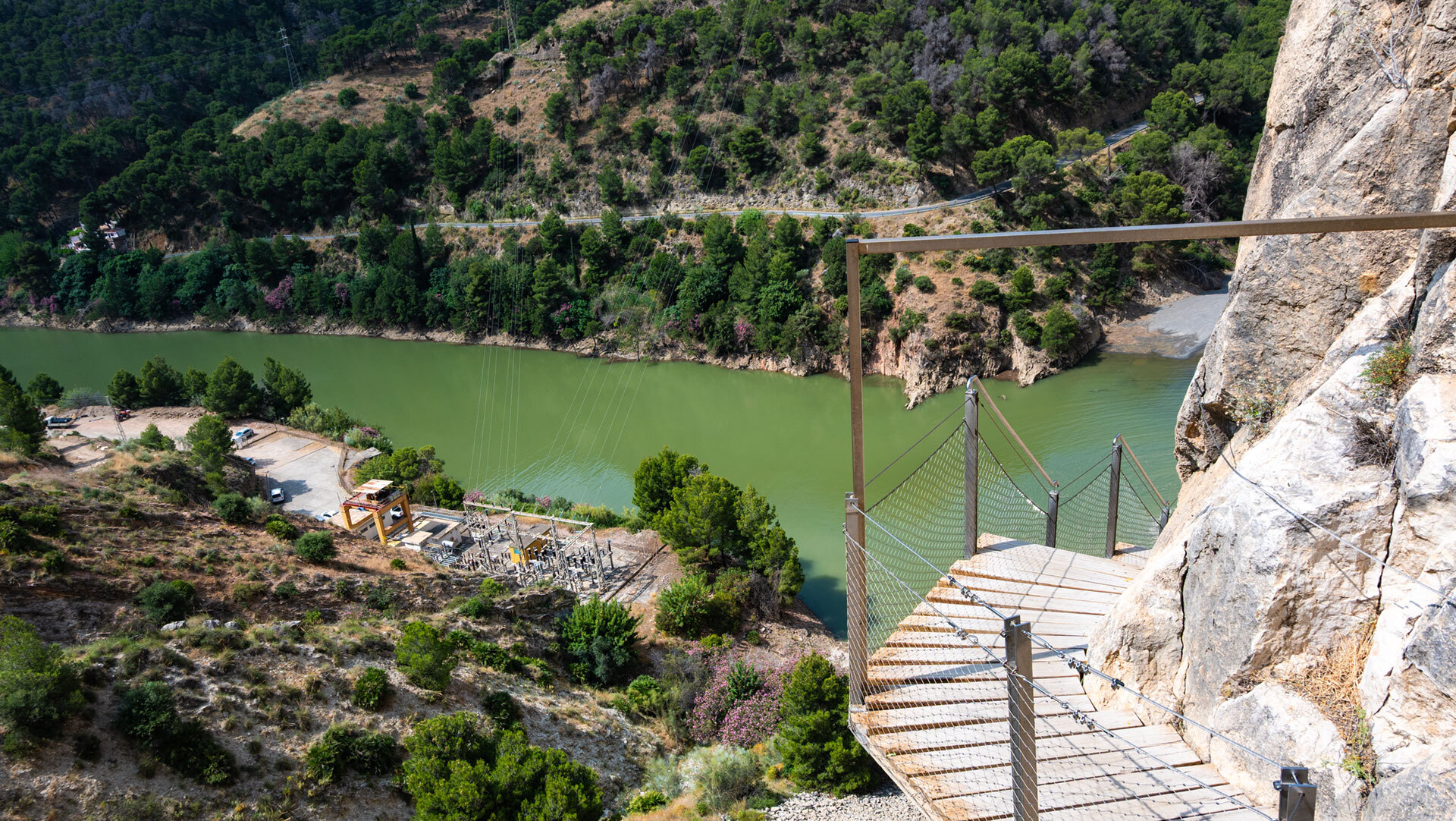
In 2011 the Junta de Andalucía began the complete restoration of the Caminito del Rey. The project was a technical and logistical achievement: new wooden walkways driven into the limestone, steel railings installed, safety systems put in place. All on cliff faces that were barely accessible.
Total costs came to around €9 million, funded by the Junta de Andalucía and the EU.
The new route
The restored route is longer than the original maintenance path. It incorporates sections of the old walkway, supplemented with new pasarela passages, tunnel sections and the spectacular suspension bridge over the Guadalhorce. A glass-floor section on the central walkway was added – for those who genuinely want to look straight down.
Reopening in 2015
On 26 March 2015, the Caminito del Rey was formally reopened. A path that had been regarded as a dangerous relic had become a safe, certified tourist route – without losing its character.
Timeline at a glance
| Year | Event |
|---|---|
| 1901 | Construction of the maintenance path begins |
| 1905 | Completion – 1 m wide, no railing |
| 1921 | King Alfonso XIII walks the path; it receives its name |
| 1989 | Paraje Natural Desfiladero de los Gaitanes (Law 2/1989) |
| 2000 | Official closure due to disrepair |
| 2002 | ZEPA – European Special Protection Area for Birds |
| 2011 | Full restoration begins |
| 2015 | Reopening after complete restoration |
Today: One of Europe’s most visited trails
Today the Caminito del Rey draws hundreds of thousands of visitors each year. The daily visitor number is capped – which means tickets regularly sell out weeks in advance.
The myth of the world’s most dangerous footpath is history. What remains: the gorge, the silence, and a path that shows what people can achieve when they decide something impossible must be done.
Tickets can be purchased via the official website at caminitodelrey.info or through tour operators such as GetYourGuide.com – advance booking is strongly recommended, especially from March to October. Daily places are limited.