Desfiladero de los Gaitanes – The Gorge Behind the Trail
More Than a Walking Trail: Discovering the Gaitanes Gorge
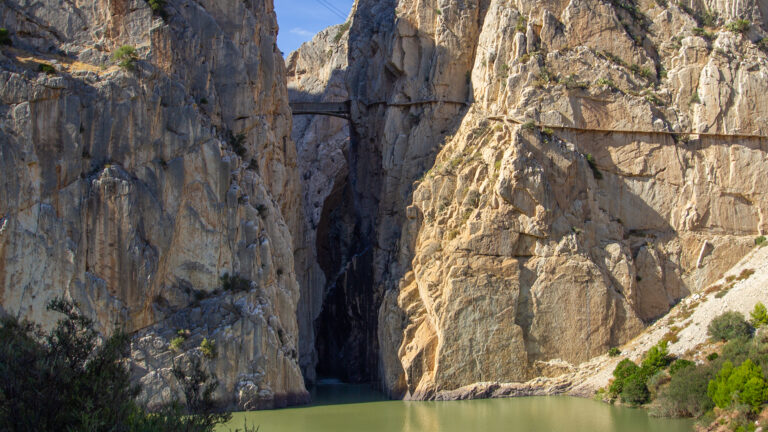
The Caminito del Rey is the best-known face of the Desfiladero de los Gaitanes – but it is not the whole story. The gorge has existed for millions of years, long before the first wooden walkway was drilled into its walls. It is one of the most significant protected natural areas in Andalusia, a geological wonder and one of the richest raptor habitats in Europe.
To walk through it is to walk through something older than any path.
Geography & geology
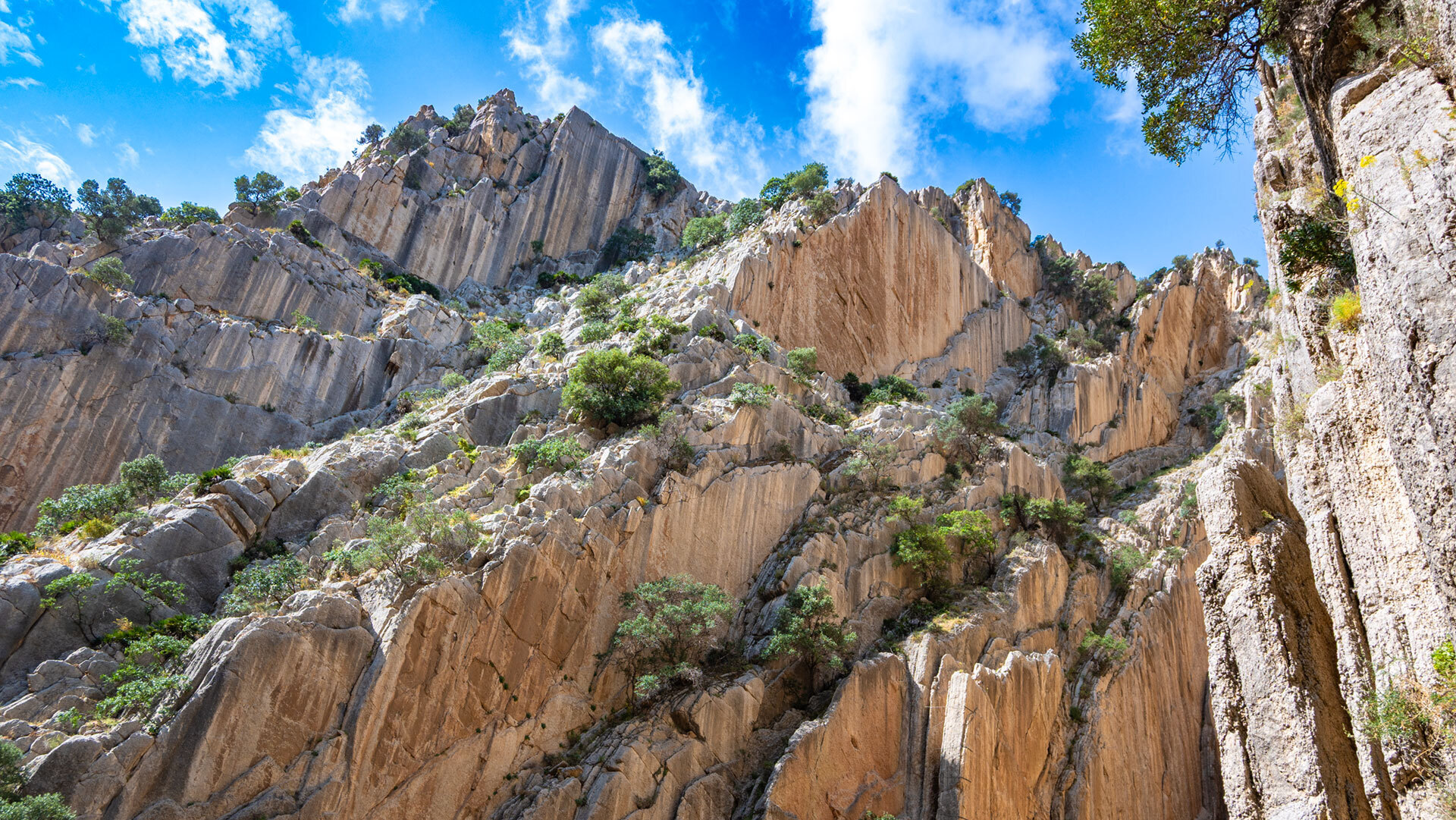
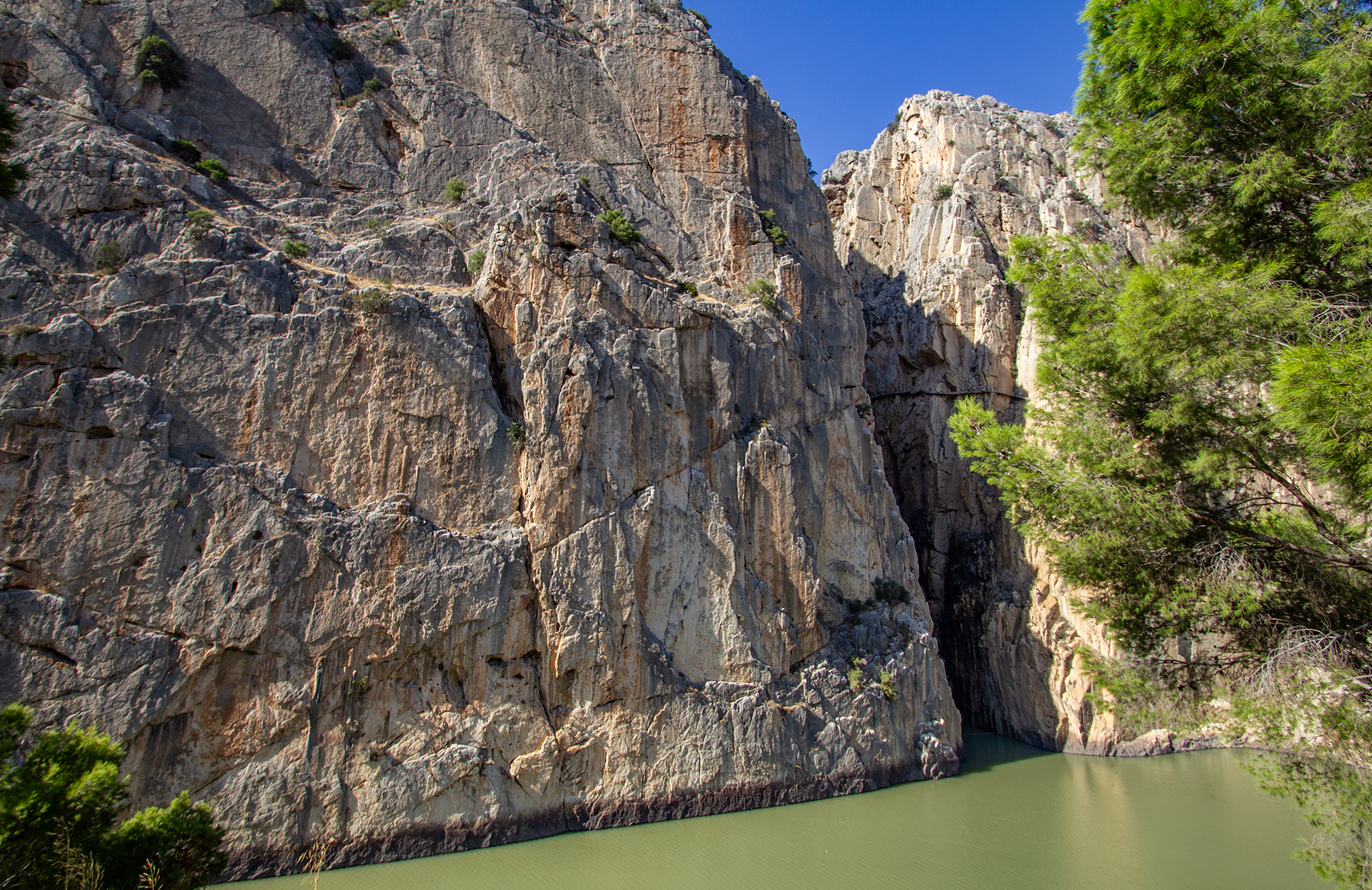
The Desfiladero de los Gaitanes lies in the province of Málaga, between the municipalities of Ardales and Álora, around 60 km north of the coast. The gorge was cut by the Río Guadalhorce into limestone – over millions of years, through erosion and tectonic uplift.
Key figures:
The vertical walls of grey and orange limestone are not merely a backdrop. They are the habitat for one of the densest raptor populations on the Iberian Peninsula.
Flora: the green inside the gorge
Despite extreme conditions – little light, no soil, vertical walls – the vegetation of the Desfiladero de los Gaitanes is surprisingly varied.
Characteristic plant species
Holm oak (Quercus ilex): The dominant tree of the gorge and surrounding slopes. Forms dense stands that prevent erosion and provide habitat.
Oleander (Nerium oleander): Along the riverbanks, in the wetter sections. Vivid pink against grey limestone in summer.
Rosemary (Rosmarinus officinalis): On the drier, sun-exposed slopes. Fills the air with its characteristic scent in spring.
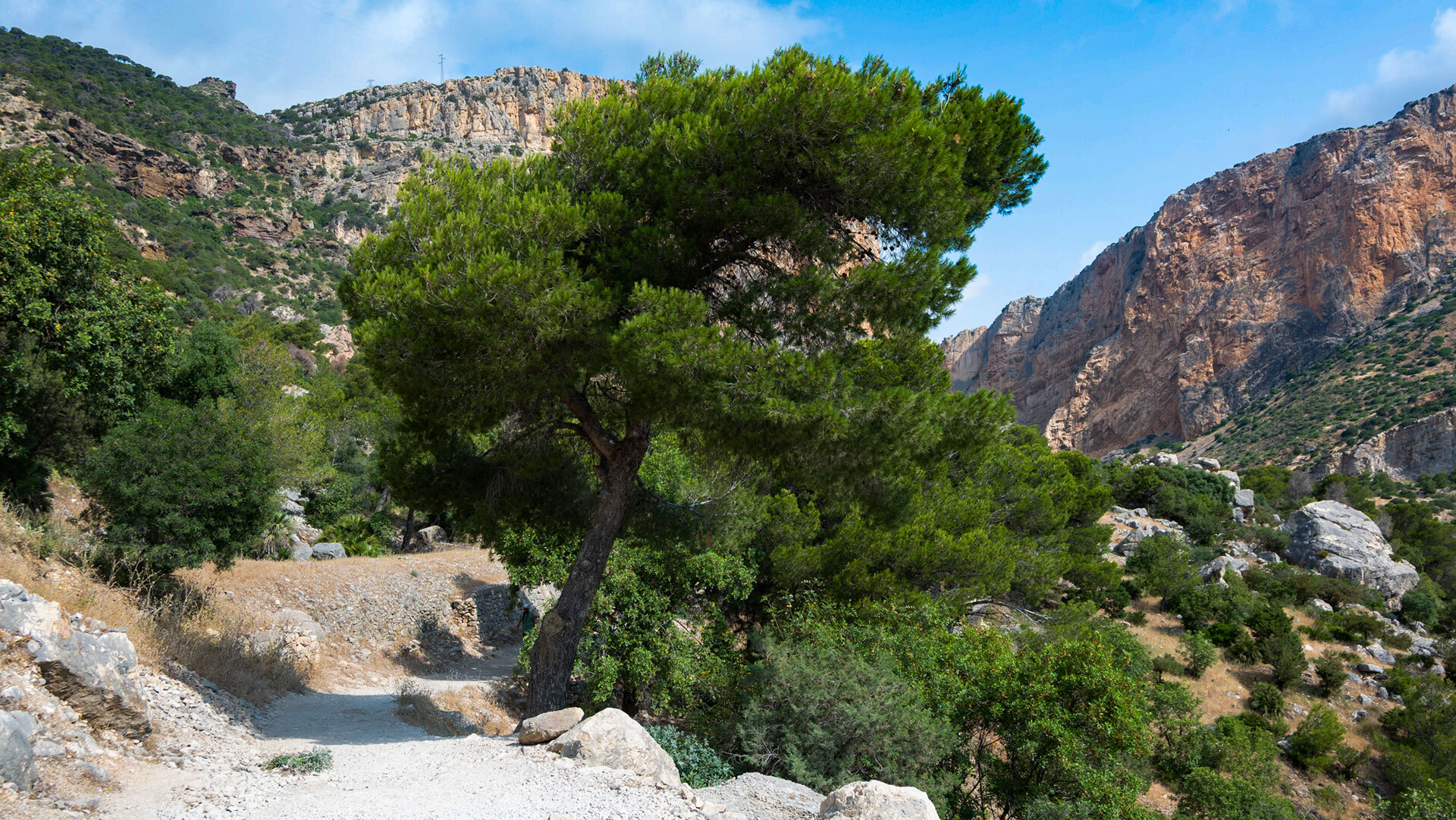
Pine forests: On the upper slopes, partly planted, partly natural. Provide shade on the approach path.
Wildflowers: In spring (March–May), a wealth of wildflowers covers the hillsides – lavender, thyme, cistus species.
Fauna: what circles in the thermals
The Paraje Natural Desfiladero de los Gaitanes holds ZEPA status – and for good reason. The thermals that form above the sun-heated limestone walls are an ideal habitat for large raptors.
Raptors
Griffon vulture (Gyps fulvus): The most common species. Colonies nest in the rock fissures of the upper gorge. Wingspan up to 2.8 m. Anyone who looks up attentively will almost always spot them.
Golden eagle (Aquila chrysaetos): Less frequent but regularly present. One of Europe’s most impressive raptors, recognisable by its long tail and narrow wingtips.
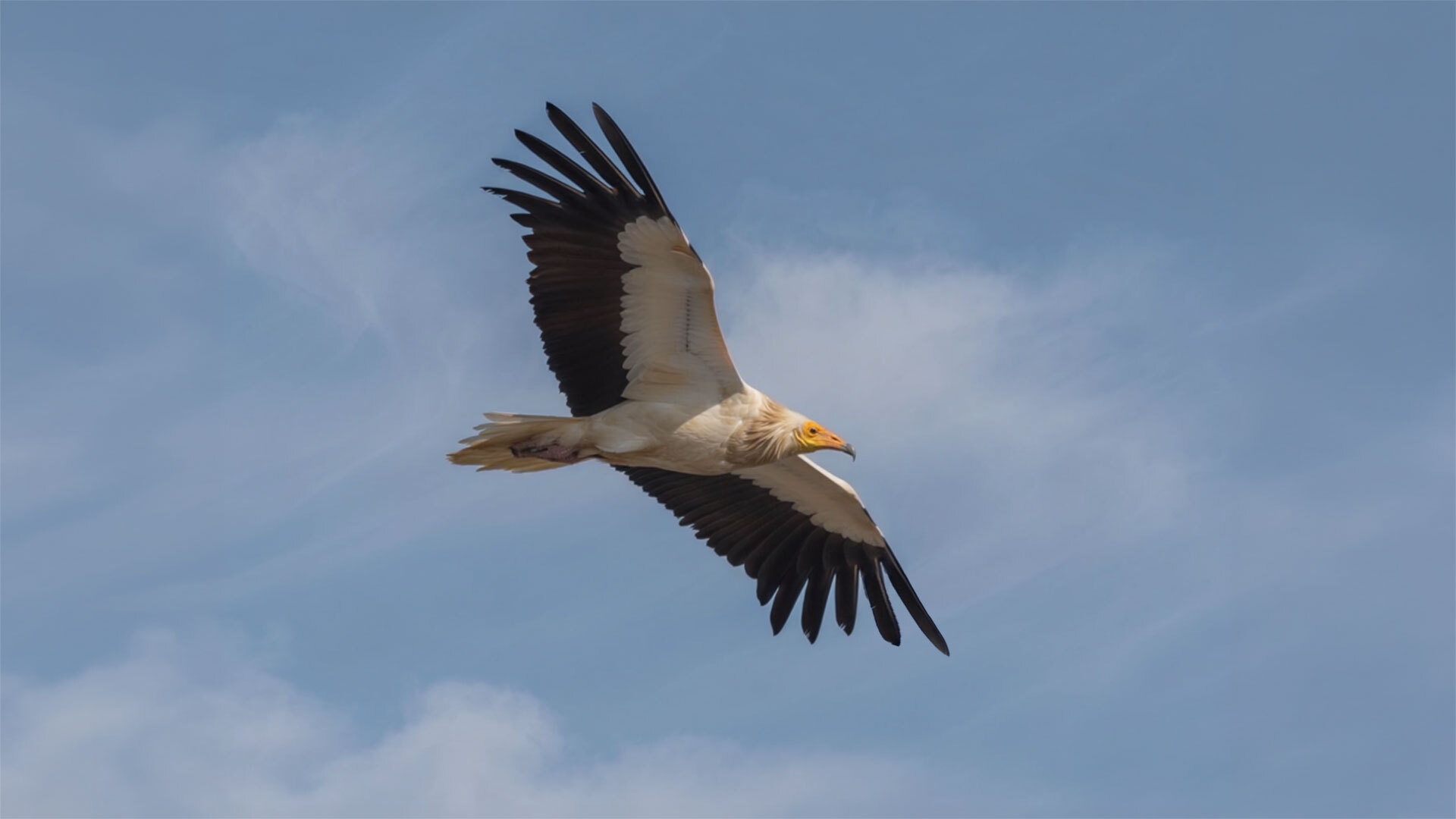
Egyptian vulture (Neophron percnopterus): Small, black-and-white with a yellow face. A migratory species – present only from March to October. Endangered across Europe.
Peregrine falcon (Falco peregrinus): Nests on the vertical walls. The fastest animal on earth in a stoop – up to 320 km/h.
Mammals
Iberian ibex (Capra pyrenaica hispanica): On the barely accessible rock ledges and scree slopes. Astonishingly sure-footed on terrain no human could stand on.
Wild boar (Sus scrofa): In the forests surrounding the gorge. Mostly nocturnal and crepuscular.
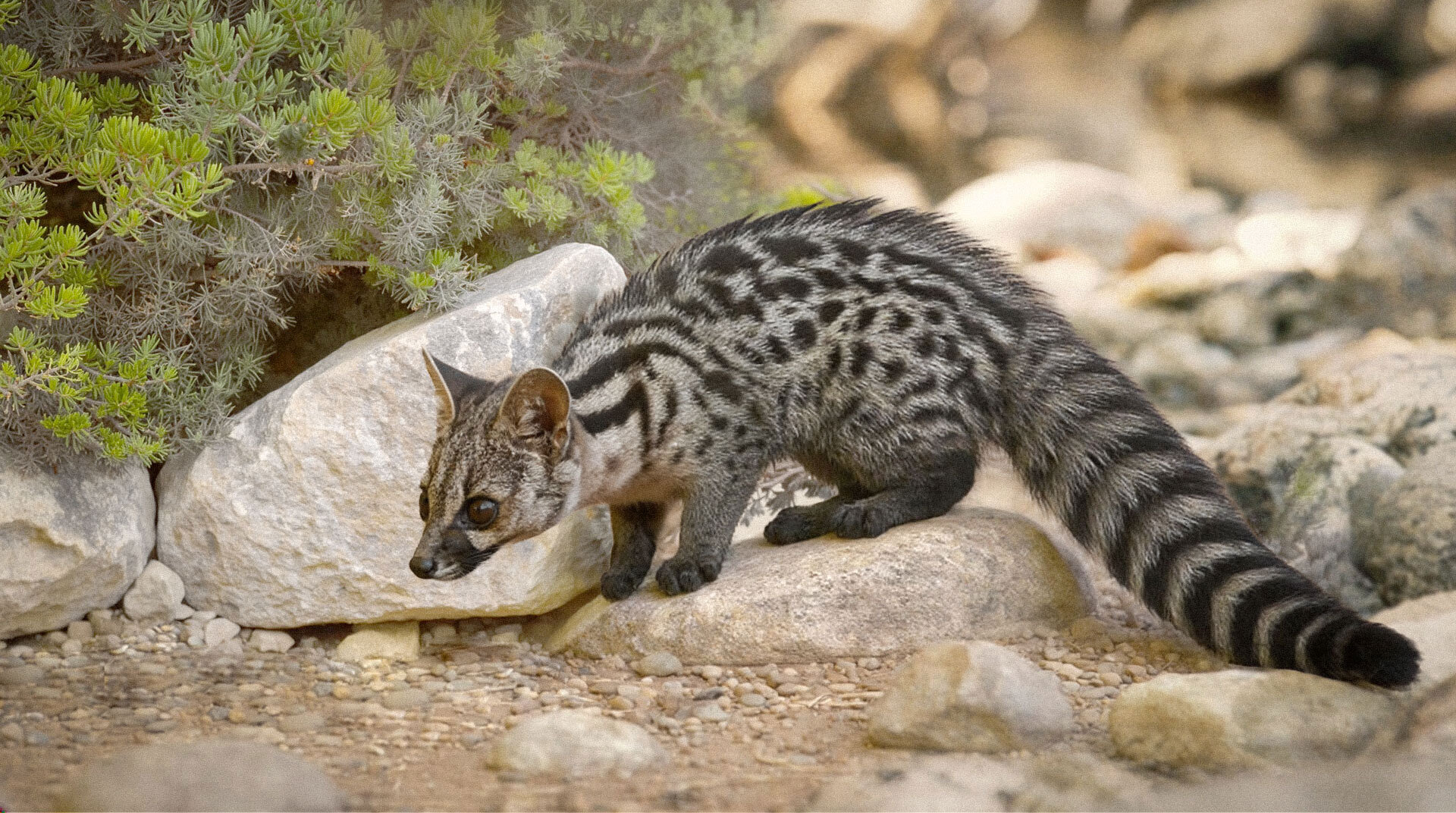
Fox, badger, genet: All three are resident in the protected area, all three rarely seen.
The protected area: rules & conservation
The Desfiladero de los Gaitanes is a strictly protected natural area. For all visitors – whether on the Caminito del Rey or in the wider region – the following rules apply:
The gorge and the water
The Río Guadalhorce – the river that carved the gorge – is today dammed. Three reservoirs lie in the immediate surroundings: Embalse del Chorro, Embalse del Guadalhorce and Embalse del Guadalteba. Together they form a remarkable water system set within the limestone landscape.
From the walkways of the Caminito del Rey, the turquoise water of the reservoir shimmers far below. A contrast that stays in the memory: grey rock, turquoise water, blue sky.
The bottom line
The Desfiladero de los Gaitanes is more than the backdrop for a walking trail. It is an independent natural wonder – geological, ecological and aesthetic. Anyone who comes only for the Caminito del Rey and does not truly notice the gorge itself has missed the essential thing.
Tickets can be purchased via the official website at caminitodelrey.info or through tour operators such as GetYourGuide.com – advance booking is strongly recommended, especially from March to October. Daily places are limited.